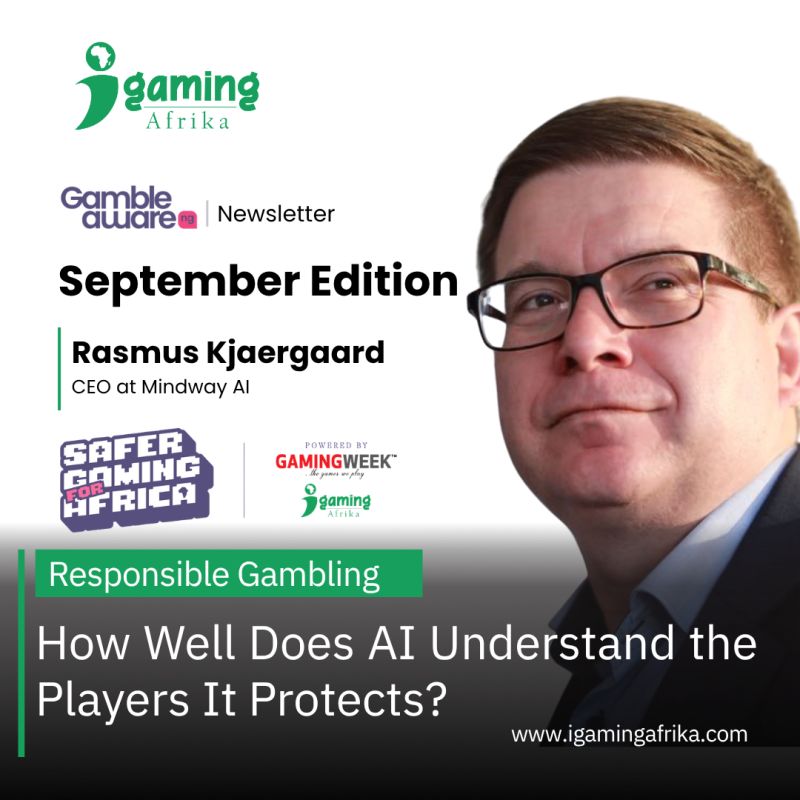
Rasmus Kjaergaard sits down with Mary Wanja from igamingafrika to discuss AI for player safety in Africa.
You emphasised the need for local calibration of AI-based player-protection systems. What specifically needs to change when such technology is deployed in African markets, given differences in player behaviour, gambling products, regulation and available data?
For every region we operate in (now 73 jurisdictions), it’s important to consider a variety of things specific to that jurisdiction. A national sporting event in one country is going to show very different betting patterns than in another. The social economic status of the player base is another thing to take into account-how much disposable income do they have and what kind of economy are they operating in? We also need to look at the specific type of sports betting, for example in Australia, horse racing dominates whereas in Brazil, football is king. All of these factors, not to mention cultural nuances, specific legislation and the technology infrastructure for online gambling, need to be taken into account.
How does GameScanner distinguish between genuinely risky gambling behaviour and unusual but legitimate behaviour? In other words, how do you minimise false positives while ensuring that high-risk players are not missed?
The fact that we look at numerous risk factors paints a more accurate and complete picture of a player’s behaviour. We do not just focus on financial or time spent thresholds for example, although they are both important factors to include, it should not be the only one. The fact that GameScanner’s algorithm is trained by human experts means there are meticulous assessments of every aspect of players’ gambling patterns. GameScanner’s algorithms learn to weigh different indicators of normal as well as addictive behaviour. This gives us the unique ability to explain its decisions with clear reasons, which form an easy and sound basis for following up with players.
You made the case that effective player protection can ultimately benefit operators by increasing player lifetime value. How should operators handle situations where intervening with a high-spending customer may mean losing short-term revenue?
Legislation is tightening all across the globe in terms of player protection. Operators cannot afford to look at short term gains and potentially risk substantial fines, reputational damage, losing investment and potentially lawsuits from individuals (which are noticeably on the rise). Competition is tough for operators but the ones that are leading are the ones that put player protection and sustainability at the heart of their operations. For the operator, this is a long-term work needed. We know from science that the earlier and more individualized the player is nudged the easier it is to change the player’s behavior. By doing so the operator in general over the customer database can bring down the risk-level in the customer database on average. Create a more sustainable customer database so to speak. We now see with our operator partners that this leads to an increase in the customer lifetime value and prevents losing customers to high-risk gambling and self-exclusion.
Unfortunately, the short-term challenges of interacting with a high-spending customer you risk losing revenue from is a challenge any commercial company, and also for gambling operators. What exactly to do is highly correlated with the local regulation, however general recommendations include personal and individual interaction, most often a phone care call, suggested play breaks and sometimes unfortunately close of account. On the other hand, players in the highest risk levels may realise their addiction and move into treatment, if not referred to by the operator, and by doing so most often also move into self-exclusion. With self-exclusion the player is most often lost for the operator. This trajectory is exactly what we try to prevent for the operator, the player, the regulator and other public authorities by the recommendation of interacting way, way earlier. By doing so we see that the huge efforts, cost and human consequences for the player are prevented and saved.
For African operators, particularly smaller ones, what is the minimum level of data, technology and investment required to implement meaningful AI-driven player protection effectively?
It is clear that the more data available, the better analysis GameScanner can provide. For GameScanner we have a structured and standardised data format outlined already. This makes it possible for us to better assess if unavailable data can be left out or substituted by other available data. So, the specific minimum level of data depends on what is available with the specific operator. When it comes to the investment required our experience is, that our starting price is at a level that should be feasible for all operators incl. small ones best documented by our smallest customer who have around 2,000 active players per month in single country.
If you were advising African regulators today, what are the three most important requirements you would want every licensed operator to meet to ensure AI is actually being used to prevent gambling harm rather than simply becoming another compliance exercise?
Look at a multi-dimensional approach that evaluates nuanced behavioural trajectories, incorporates human clinical expertise and AI. Assess how AI is actually used in their country and ensure that minimum standards are met, staying ahead of the legislation-be proactive rather than reactive. Finally, collaborate with other jurisdictions to avoid making the same mistakes and build a solid and safe ecosystem. In my view, the most successful regulators are the ones who collaborate both with each other and with all the different stakeholders in their market.