How can at-risk gamblers be identified before they slip into addiction? Mindway CEO Rasmus Kjaergaard speaks with GlücksWirtschaft how AI and neuroscience are revolutionising gambler protection.
Mindway AI, a Danish startup specializing in AI-powered player protection, has transformed itself from an academic project into a leading global provider in just a few years. CEO Rasmus Kjaergaard, a technology manager with over 20 years of leadership experience, has been instrumental in the company’s expansion and global success since 2019. At the Gaming in Germany Conference 2025, he gave a presentation on responsible gaming and innovative protection concepts. In this interview, Kjaergaard discusses his personal journey and how neuroscience and AI work hand in hand at Mindway AI. He also outlines the challenges of globally scaling such systems and reveals which new tools will be coming to the gambling industry in the next few months.
Mr. Kjaergaard, could you first describe your personal career path in the field of player protection – what motivated you to focus on this area at Mindway AI?
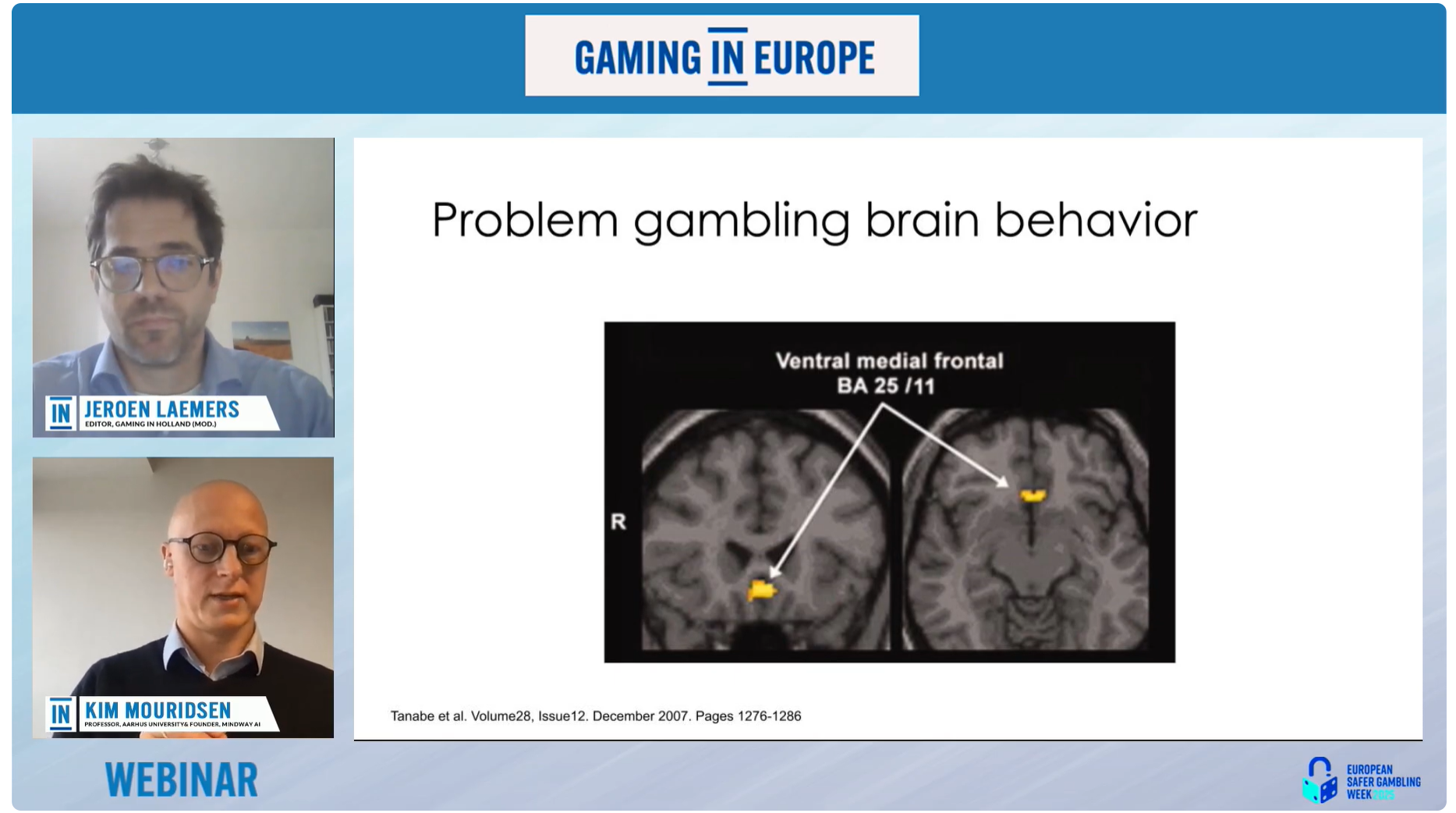
Mindway AI originated as a spin-off from Aarhus University in Denmark, initiated by Professor Kim Mouridsen. Initially, he used human experts to train AI algorithms for medical purposes, such as helping doctors interpret brain scans in cases of illnesses like cancer or stroke. Later, the question arose whether the same methodology could be used to detect problematic gambling behavior, and he collaborated with the pathological gambling clinic at the university hospital. This led to the founding of Mindway AI in April 2018. I joined the team in December 2019 after Better Collective acquired Mindway AI; at that time, we were a small team of three people with no customers or products. My task was to transform this academic spin-off into a thriving company, which we successfully accomplished.
Mindway AI emerged from academic research as a spin-off of Aarhus University. How exactly have neuroscientific findings influenced your product development?
Our solutions are based on research and advanced brain-scanning technology. We have studied the biological processes underlying normal and problematic gaming behavior to derive innovations. In developing GameScanner, we draw on insights from neuroscience, neuroimaging (brain imaging), and addiction research to continuously improve its algorithms and unique approach.
Instead of relying solely on statistical models, GameScanner is designed to learn subtle risk characteristics validated by psychologists. These experts review comprehensive data—from gameplay to transaction histories and customer communication patterns—and assess player behavior on a scale of 0 to 100. One of GameScanner’s key deliverables is this risk score, which categorizes players into five ascending risk levels. At the lowest levels, the system might only trigger a simple pop-up or a self-help tool. However, as the score increases, the operator’s response becomes more intensive: from directly addressing the player to setting deposit limits and referring them to support services. This finely graduated escalation mirrors real-world therapeutic approaches, calibrated to gradually shift from automated alerts to targeted human interaction as the risk increases.
Technologies such as artificial intelligence (AI), machine learning, and behavioral analytics are often cited as driving forces behind innovation in player protection. Which of these do you consider the most transformative – and how does Mindway AI differentiate itself in this area?
We have a panel of highly experienced gambling addiction experts, researchers, and psychologists who meticulously analyze gaming patterns and continuously improve the algorithms of our GameScanner. The combination of machine learning and human experience not only enables a very comprehensive profile of each player and increases the precision of our solution, but also allows for earlier detection, monitoring, and intervention.
Their systems monitor millions of active players worldwide across dozens of jurisdictions. What challenges arise when scaling such systems – both technically and regulatory?
Yes, we currently monitor 14.7 million active players per month with GameScanner. As AI technology advances, we continuously develop our solutions through intensive research and development as well as technical enhancements. Mindway AI deliberately focuses on research and innovation to explore new technologies and optimize our offering. Furthermore, upcoming collaborations with AI specialists outside the gambling industry will bring new perspectives and further drive development. All these efforts ensure that we continuously refine our solutions and remain at the forefront of AI development, while simultaneously complying with strict regulatory requirements at all times.
Personalization plays a crucial role – for example, through individual risk scores or intensity-based warnings. How does Mindway AI strike the right balance between automation and the necessary human and ethical considerations?
Mindway AI strikes the right balance between automation and human judgment through our GameScanner analytics dashboard, which provides operators with a comprehensive overview of their customers’ risk profiles. By leveraging expert-assessed data, GameScanner’s algorithms learn to distinguish between normal and problematic gaming behavior. This explainable AI approach ensures operators understand why certain players are classified as risky, leading to targeted, personalized communication.
Our solution is extremely precise, identifying at least 87% of at-risk and problematic players just as a human expert would. The involvement of an experienced panel of experts ensures that human insights continuously refine the algorithm, adding an extra layer of expertise to our advanced software. This combination allows operators to promote ethical gaming practices by offering personalized, evidence-based interventions while maintaining the efficiency of automation.
The regulatory environment and data protection are becoming increasingly complex. How does Mindway AI address issues such as data quality, algorithmic bias, and transparency towards regulators?
Data is absolutely crucial to everything we do with our GameScanner solution. It provides operators with detailed insights into gaming behavior to identify at-risk and problematic players – currently a total of 14.7 million active players per month worldwide. However, contrary to what one might assume, data isn’t simply available in a usable format from the outset. A significant amount of work is required behind the scenes to set up data integration when we implement GameScanner for a client. We had to develop this capability to offer our clients an even better user experience.
Player protection is also a key component of gambling providers’ business strategy. How do you convince partners to go beyond mere compliance and implement truly innovative, proactive protection measures?
We emphasize that player protection is not simply a matter of ticking a box, but essential for long-term business success. By working with operators of all sizes across the 64 jurisdictions in which we operate, we demonstrate how proactive measures build player trust and loyalty. Our partners already view player protection as a core component of their business, and we reinforce this perspective by providing tailored guidance, fine-tuning, and advisory services as needed. This collaborative approach ensures that operators implement innovative strategies aligned with their unique business objectives, keeping them ahead of compliance requirements while prioritizing player well-being.
Looking ahead to the next 12–18 months: What innovations can we expect from Mindway AI – are there new intervention tools, predictive models, or integrations on the horizon?
Until recently, our main focus was on online gambling providers. The main reason for this was that land-based casinos traditionally generate very little electronic data, at least not to the same extent as online providers.
In September, however, we announced a partnership with Crown Resorts to introduce GameScanner in their Australian casinos. This collaboration marks the largest global implementation of our technology in a land-based environment to date and is the first application in Australia. It sets a new industry benchmark and underscores Crown’s commitment to safe and sustainable gaming.
In general, we are observing a clear global trend: More and more data is being collected in the land-based sector, for example through slot machine platforms or loyalty cards, and this data volume is approaching that of online providers. Our GameScanner can analyze this information in a similar way to online data. We therefore see great potential for GameScanner in traditional casinos and so-called omnichannel operators who operate both online and offline.
Another exciting area of development is our new AML (Anti-Money Laundering) module, which is fully integrated into our core product, GameScanner. Using a data-driven approach to monitoring transactions through behavioral analysis, our partners can now address both responsible gambling (RG) and suspected money laundering cases on a single platform. Key features include dedicated analytics within the GameScanner dashboard, risk-free sandboxing of rule configurations, and the automatic triggering of alerts for suspicious cases for further investigation.
From your perspective: How will the expectations of players, regulators and operators develop in the coming years – and how does Mindway AI intend to contribute to shaping these developments?
In the coming years, players, regulators, and operators are expected to demand even greater transparency, personalized communication, and robust player protection in the gambling industry. Players will prefer offerings that prioritize their safety, while regulators will enforce stricter measures for responsible gambling. Operators, in turn, will need to implement technologies that meet these growing demands.
Mindway AI is a pioneer in this area. We maintain an active dialogue with industry stakeholders and are deeply engaged with future trends, for example through webinars such as the one scheduled for January on player protection forecasts for 2026. Recently, we partnered with VIXIO during Safer Gambling Week in London to host a breakfast briefing on precisely these topics. All these initiatives ensure that we not only adapt to changes but also actively shape the industry’s development. In this way, we help all stakeholders stay ahead of the curve and create a safer, more sustainable gambling environment.
Finally, if you had one wish – whether technological, regulatory or societal: What would have to happen to raise player protection to a completely new level?
Interesting question. I would like to see the gambling industry make much greater use of behavioral analysis to improve player protection. Based on this, regulations should be created that are grounded in evidence and research findings on player protection, rather than in political compromises made without such scientific evidence.